Determined to strengthen reading instruction for learners with visual impairment, the Philippine National School for the Blind held a focused Learning Action Cell (LAC) session on February 14, 2025—an engaging discussion that empowered teachers with strategies to make reading instruction more meaningful, structured, and accessible. The afternoon program demonstrated that when educators refine their teaching practices, learners gain clearer pathways toward fluency and comprehension.
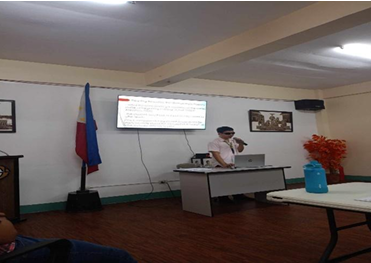
The session, conducted at the school’s Mini Conference Room, began at 1:00 p.m. under the guidance of facilitator Mr. Reymart Abante. Program preliminaries were led by Ms. Kaizel Ann Caranto before the main discussion was delivered by the resource speaker, Mr. Ronald M. Manguiat. Present were teachers handling Filipino, English, Braille Reading and Writing, and Remedial Reading—making the session a valuable collaboration across literacy-related subjects.
Mr. Manguiat emphasized that the session supports Project BRIGHT, aligning teachers with strategies needed for the upcoming reading monitoring schedule. He began by clarifying the core components of reading fluency, highlighting speed, accuracy, and expression as indicators of a learner’s reading development. The comparison between average reading rates of Braille readers (100 words per minute) and sighted readers (400–500 words per minute) provided teachers with clearer benchmarks for assessing student progress. He noted that fluency begins with word-by-word reading in early stages, a natural developmental milestone for young readers.
Teachers explored several effective strategies for developing reading speed and accuracy among blind learners. Since visual cues such as pictures cannot be used, Mr. Manguiat emphasized the importance of familiar text, repetition, immediate corrective feedback, and targeted decoding practice. He also stressed the need for teachers to maintain a student reading profile, which helps track progress and identify emerging strengths and challenges—an important tool for structured literacy instruction.
The session transitioned into a comprehensive discussion on listening and reading comprehension, acknowledging that comprehension is the ultimate goal of literacy. Teachers learned the before-, during-, and after-listening strategies that build understanding, such as connecting to prior knowledge, predicting outcomes, mapping the setting, and inferring characters’ feelings. The presentation also introduced the five levels of comprehension—from literal to creative—which help teachers craft questions that progressively deepen students’ analytical skills.
After the lecture, participants discussed concerns and clarified classroom application techniques. The session concluded with the awarding of certificates, presented by Ma’am Gemma, recognizing the speaker and the technical working group for their contributions. The meeting adjourned at 3:50 p.m., ending a productive and enriching professional development activity.
This LAC session reaffirmed PNSB’s commitment to empowering teachers with specialized strategies tailored to learners with visual impairment. By enhancing reading fluency and comprehension skills, the school continues to ensure that every learner—regardless of ability—has the opportunity to build literacy, confidence, and lifelong learning habits.